
Home / Journal / The keyboard never evolved. We did.
The keyboard never evolved. We did.
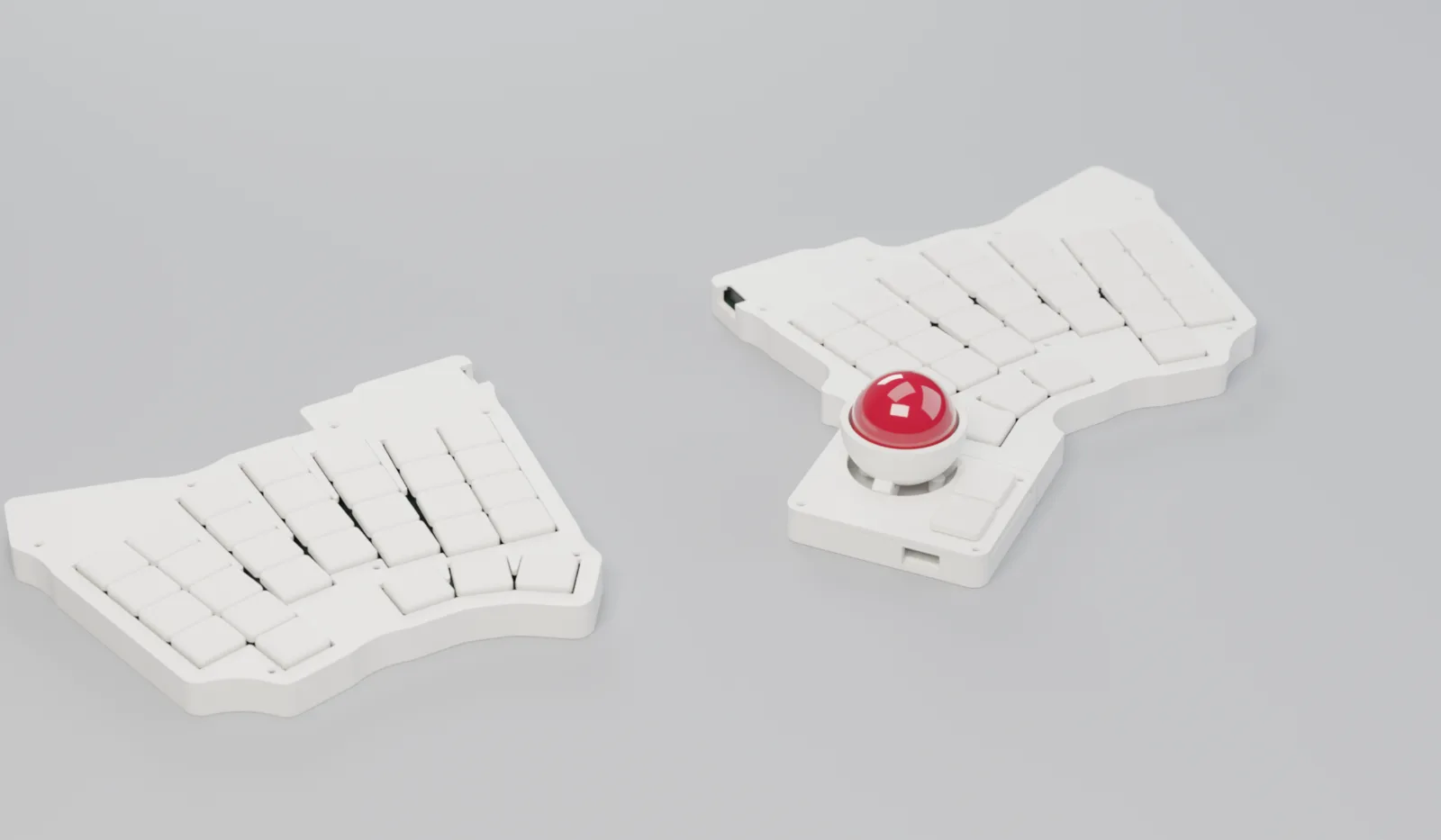
Phones went from buttons to glass. Cars learned to park themselves. The keyboard on your desk would look familiar to a typist from 1900.
A layout made for levers
The QWERTY layout comes from the typewriters of the 1870s. Each key sat on a metal lever, and the rows were offset sideways so those levers could pass each other. That's why the rows on your keyboard slant to the left.
Computers don't have levers. The slant stayed anyway, because everyone had already learned it. So your fingers still move diagonally to reach keys, for a reason that disappeared a long time ago.
Then the computer added more keys
Computers added a function row, arrow keys, a navigation block and a number pad. A standard full-size keyboard now has 104 keys. Many of them are too far to reach without lifting your hand off home row and finding your place again.
And the mouse took your hand away
Every time you point, click or scroll, your right hand leaves the keyboard, travels to the mouse and comes back. That happens hundreds of times a day. On a full-size keyboard, the number pad pushes the mouse even further out to the right.
One slab, two hands
A regular keyboard puts both hands on one narrow board in the middle of your body. Your shoulders are wider than that, so your arms angle in and your wrists bend outward to line your fingers up with the rows. One study measured that bend at about 12° on a regular keyboard, and within 5° of straight on split keyboards (sources).
What changes when you start from the hands
- It splits in two, so each hand rests in front of its own shoulder.
- Keys sit in straight columns, so fingers move up and down the way they naturally bend.
- It has fewer keys and uses layers for the rest, so nothing is more than a finger move away.
- Thumbs do real work, instead of sharing one space bar.
- The pointer comes to you. On Lagos, a trackball, TrackPoint or touchpad sits under your right thumb.
Why it matters more now
AI changed what a workday looks like for a lot of people. We write prompts, read and edit drafts, review code and answer messages, all in text. Less time goes to clicking through menus and more goes to typing. The keyboard is the tool we use most, and it deserves the same rethink as everything else on the desk.
That's why we started Mitus Labs. Our slogan is our design rule: designed to keep your hands on the keys.
Designed to keep your hands on the keys.
Lagos (64 keys, with a pointer bay) and Minos (38 keys). Ships assembled. $100 refundable deposit.
Build yours